Acast Expands UK Presence With Exclusive Persephonica Partnership
Two major players in the UK podcast industry have joined forces to strengthen their market position. Acast, the global authority on podcasting infrastructure, has signed an exclusive, multi-year partnership with Persephonica, one of the UK’s leading podcast production companies. The deal marks a significant consolidation in the British podcast landscape and underscores Acast’s continued investment in premium content creators.
What the Partnership Covers
Under the new agreement, Acast will provide comprehensive advertising sales, hosting, and distribution services across Persephonica’s entire portfolio. This includes several high-profile shows that have already established themselves in the UK market:
- Bad Chat with Greg James and Alice Levine
- Miss Me? with Miquita Oliver and Jordan Stephens
- Dig It with Jo Whiley and Zoe Ball
- Political Currency with Ed Balls and George Osborne
Importantly, the partnership extends beyond traditional audio. Acast will also support Persephonica’s video expansion strategy, helping the company build audiences across YouTube, social media platforms, and emerging podcast video services—a growing priority for podcast companies seeking to diversify revenue streams and reach.
Infrastructure and Creative Independence
The partnership leverages Acast Studios London’s state-of-the-art facilities. Persephonica will record Bad Chat and Political Currency at the London studio, while maintaining its primary headquarters in Sheffield. This arrangement reflects a modern approach to podcast production, where companies can maintain geographic independence while accessing premium production infrastructure when needed.
A key feature of the deal is Persephonica’s retention of creative independence. In an industry where content quality often depends on creative autonomy, Dino Sofos, Persephonica’s Founder and CEO, emphasized that creative control remains central to the company’s identity. “We’re working with some of the most talented creators in the business and building shows with passionate communities around them,” Sofos stated. “Our partnership with Acast gives us the commercial and technical support to keep investing in those shows and expand our network, while retaining the creative independence that has been central to our success from day one.”
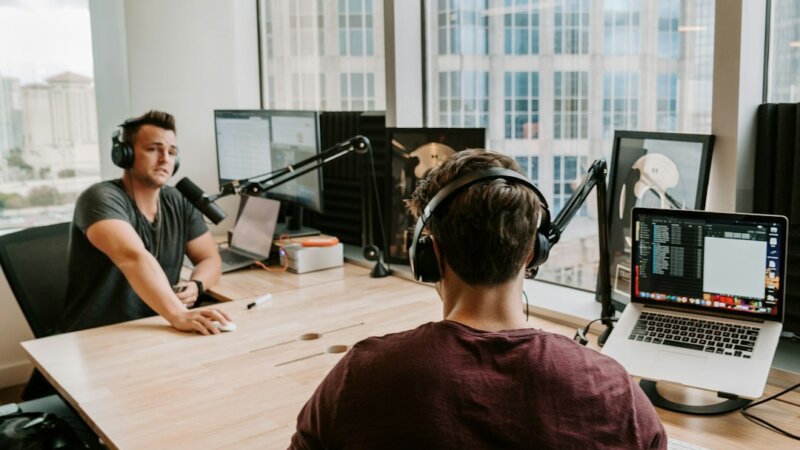
As shown in the image below, Acast’s London studio represents the kind of modern production facility that podcasters increasingly expect—combining professional audio and video capabilities with collaborative workspace design.
What This Means for Advertisers and Audiences
Josh Woodhouse, Acast’s Managing Director for UK & Ireland, framed the partnership around what he calls “narrative influence.” According to Woodhouse, “Persephonica don’t just make great shows—they build narrative influence. That’s the kind of content that shapes culture, earns audience trust, and gives advertisers something no algorithm can manufacture. At Acast, we exist to amplify that influence and allow advertisers to tap into it at scale.”
This positioning is telling. Rather than competing on reach alone, the partnership emphasizes premium content and engaged audiences—precisely what brands increasingly seek in podcast advertising. For Persephonica’s shows, which already feature established personalities and strong listener loyalty, the deal provides access to Acast’s network of 4,000+ advertisers globally, potentially unlocking new revenue opportunities.
The Broader Industry Trend
This partnership reflects ongoing consolidation in the UK podcast sector, where independent producers are increasingly partnering with larger infrastructure and distribution platforms. For podcasters and production companies evaluating their own positioning, the Acast-Persephonica deal offers important lessons: professional infrastructure, distribution reach, and commercial support matter—but so does maintaining the creative vision that audiences tune in for.
For podcast professionals working with production companies, talent management teams, or considering their own growth strategies, this kind of partnership model—combining outsourced commercial and technical services with in-house creative control—represents a practical approach to scaling without compromising editorial independence.
Source: Podwires Newsletter