Auphonic, a cloud-based audio production platform, has released a new feature allowing podcast producers to render subtitles directly into video files using automatically generated transcripts, eliminating the need for separate subtitle editing tools.
The burn-in subtitles feature combines Auphonic’s existing automatic speech recognition capability with its video output functionality. Producers enable speech recognition to generate word-level transcripts, add a video output, and select the burn-in subtitles option to embed styled, timed captions directly into the video file. The feature works with any video output format, including videos generated from cover images or audiograms, making it accessible for audio-only productions that need captioned social media content.
The tool addresses a specific production challenge: social media platforms often autoplay videos muted and do not reliably display separate subtitle tracks. By baking captions into the video image itself, producers ensure captions display consistently across platforms regardless of player support. The timing is automatic and driven by the word-level transcript, requiring no manual synchronization.
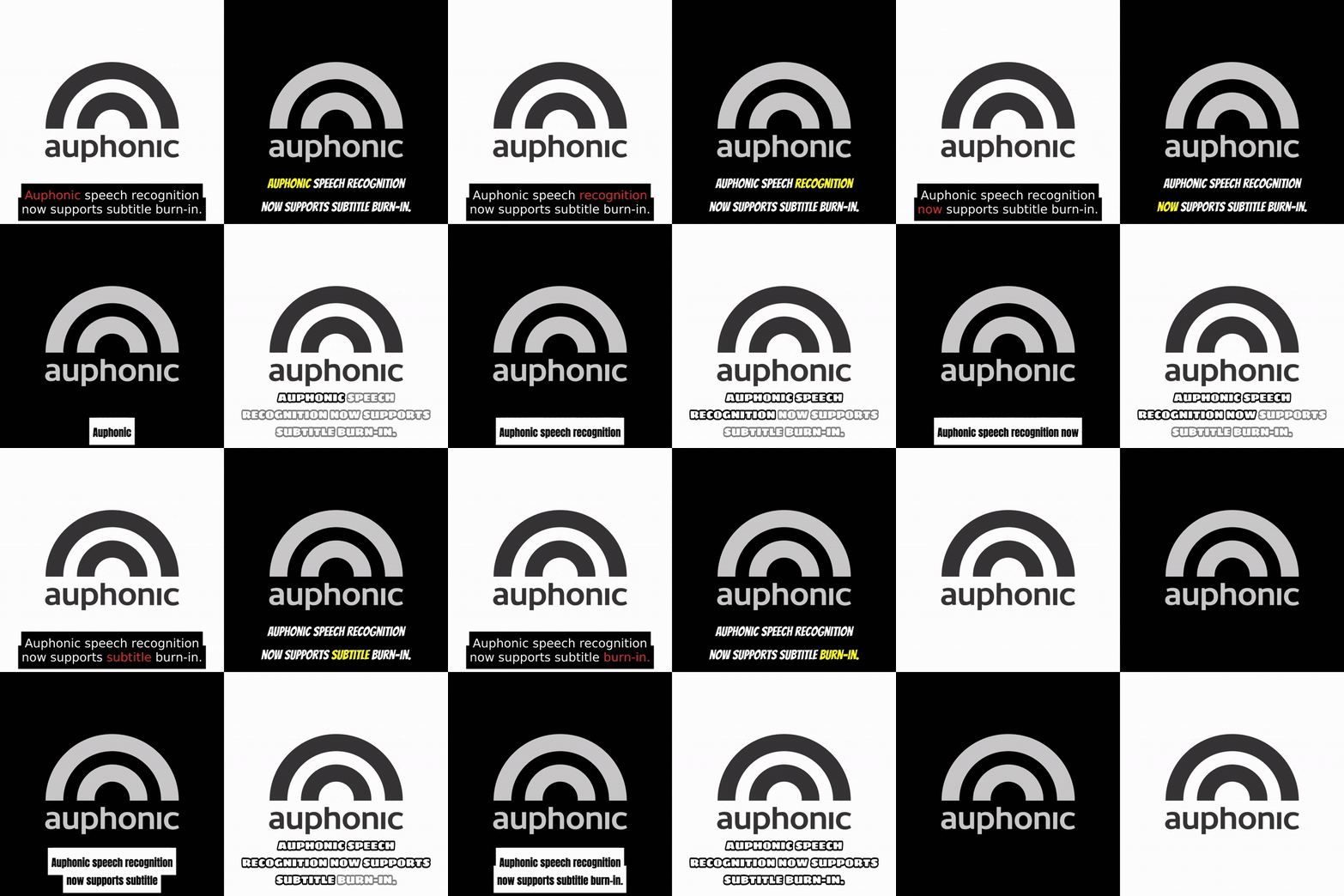
Styling options include 22 built-in fonts ranging from clean sans-serif typefaces to bold display styles. Producers can control font size, apply bold and italic formatting, select uppercase toggles, and choose among five style modes: plain text, colored outline, white outline, colored background, or white background box. Caption positioning is adjustable horizontally (left, center, right) and vertically (top, middle, raised bottom, bottom). Per-word highlighting effects include karaoke mode, where words appear sequentially; reveal mode, which dims upcoming words; color changes on active words; and border and glow effects. A live preview shows styling results before processing begins.
For podcast creators and audio engineers, the feature streamlines workflow by consolidating transcription, video generation, and caption styling into a single platform. Producers no longer need to export subtitle files in SRT or VTT formats and coordinate with separate video editing software. The automatic synchronization based on word-level transcripts eliminates timing errors common in manual caption workflows. For audio-only podcast networks, the ability to generate captioned video clips from cover images directly expands distribution options on platforms like Instagram, TikTok, and YouTube Shorts without additional production steps.
The capability extends to Auphonic’s API and command-line interface, allowing producers to integrate burn-in subtitles into automated production pipelines. API calls control styling through a burn_in_subtitles object specifying font, size, style mode, and word highlight effects. Command-line users can burn styled transcripts into videos with a single command, passing subtitle styling parameters directly to the processing workflow. Developers can query available fonts, styles, and alignments through the API documentation.
Auphonic documented the feature as the latest in a series of video-focused updates, following recent releases including automatic video cutting to remove silence and filler words, and studio voice enhancement capabilities. The platform positions burn-in subtitles as part of its broader focus on integrating audio and video production within a single environment. The feature addresses accessibility standards as well, since embedded captions serve viewers who require or prefer text alongside audio content.
The burn-in subtitles feature is immediately available to Auphonic users through the web interface, API, and CLI. No additional software, subscriptions, or video editing expertise is required. Auphonic stated it continues to refine features based on production workflows and welcomes user feedback through its contact page and support email. The release reflects growing demand among podcast networks for efficient tools to repurpose audio content into short-form video for social media distribution.
Source: Auphonic — Read the original article →