# Podcast Jobs Marketplace: How to Find, Land, and Thrive in Podcast Industry Careers
The podcasting industry is growing — and with that growth comes a steadily expanding need for skilled professionals behind the scenes. Producers, editors, hosts, audio engineers, and show strategists are all in demand as networks, publishers, and independent creators scale their operations.
For anyone looking to break into the industry or advance their podcast career, understanding how the podcast jobs marketplace works is the essential first step. [Podwires](https://podwires.com) exists precisely to connect podcast professionals with the opportunities, news, and resources they need to succeed.
This guide covers what the podcast jobs marketplace looks like today, what roles are in demand, how to position yourself for hiring, and where to find legitimate work — whether you’re a seasoned producer or just starting out.
—
## What Is the Podcast Jobs Marketplace?
## Key Takeaways
– The podcast jobs marketplace refers to the ecosystem of job listings, freelance opportunities, talent networks, and hiring pipelines that connect podcast creators and companies with skilled audio professionals.
– To understand where the jobs are, it helps to understand what’s happening across the industry right now.
– One of the most appealing aspects of the podcast industry is how naturally it lends itself to remote work.
– Breaking into the podcast industry without a track record can feel daunting, but the barrier to entry is genuinely lower than in many other media fields.
– Getting hired as a podcast producer — especially at a network or established production company — requires demonstrating a specific set of competencies.
– Editing is the entry point for many podcast professionals, and it’s one of the most viable work-from-home careers in the audio industry.
The podcast jobs marketplace refers to the ecosystem of job listings, freelance opportunities, talent networks, and hiring pipelines that connect podcast creators and companies with skilled audio professionals. It spans everything from full-time staff roles at major podcast networks to freelance gigs for independent show hosts.
Unlike traditional media industries, podcasting has a relatively flat entry barrier. Many roles — particularly editing, production assistance, and show notes writing — are accessible to motivated beginners willing to develop their craft. At the same time, senior-level roles in strategy, advertising, and network management are increasingly competitive and well-compensated.
[Podwires](https://podwires.com) operates a dedicated podcast-professional marketplace that brings together jobs, producers, editors, and hosts in one focused destination — purpose-built for the podcast industry rather than relying on general job boards.
### Why the Podcast Industry Job Board Matters
General job boards like LinkedIn or Indeed surface podcast roles, but they lack the specificity that podcast professionals need. A dedicated podcast industry job board filters for relevant roles, uses industry-appropriate language, and attracts employers who understand what they’re looking for.
For employers, a specialist board also means a higher quality of applicant — people who are already invested in the medium, understand the workflows, and don’t require extensive onboarding into what a podcast actually is.
—
## The State of the Podcast Industry in 2026
To understand where the jobs are, it helps to understand what’s happening across the industry right now. According to reporting from [Podwires](https://podwires.com), the podcast sector in September 2026 is seeing significant movement across networks, platforms, and publishers.
Inflection Point Entertainment’s Inflection Network recently welcomed *Tony Mantor: Why Not Me?* — a top-ranked podcast focused on autism and mental health — expanding its distribution through a deal with iHeartMedia. Network growth like this signals continued demand for producers, editors, and show strategists who can support expanding podcast rosters.
Meanwhile, Audacy has secured exclusive sales and distribution rights for economist Justin Wolfers’ *Platypus Economics* podcast, expanding its premium business programming slate. These kinds of exclusive partnerships create new production and editorial roles as networks invest in content they’ve committed to.
BBC Studios is also expanding, giving BBC.com subscribers in the United States and Canada early access to BBC podcast episodes — and launching a video version of the acclaimed *In Our Time* series. Video integration into podcast workflows is one of the fastest-growing skill areas in the industry right now.
These moves collectively point to an industry that is consolidating around quality, investing in distribution, and creating real professional opportunities for people with the right skills.
—
## Remote Podcast Production Jobs: What to Expect
One of the most appealing aspects of the podcast industry is how naturally it lends itself to remote work. Audio files can be shared digitally, editing can happen anywhere with the right software, and communication between producers, hosts, and clients is largely asynchronous.
### Types of Remote Roles Available
Remote podcast production jobs typically fall into several categories:
**Audio Editor** — Editing raw recordings for clarity, removing filler words, balancing audio levels, and adding music or sound effects. This is one of the most in-demand roles in the marketplace and is highly accessible to beginners with the right tools and practice.
**Podcast Producer** — A broader role that may include pre-production research, guest coordination, episode structuring, and post-production oversight. Producers often manage the full lifecycle of an episode from concept to publish.
**Show Notes Writer** — Creating written summaries, timestamps, and SEO-friendly descriptions for each episode. This role bridges podcast production and content marketing.
**Podcast Host** — Some companies hire hosts for branded or network podcasts. This role requires strong presentation skills, subject matter familiarity, and the ability to hold an engaging conversation.
**Distribution and Strategy Specialist** — As networks like the Inflection Network expand their iHeartMedia distribution footprints, professionals who understand podcast distribution platforms, RSS feeds, and audience analytics are increasingly valuable.
### What Remote Work in Podcast Production Actually Looks Like
Most remote podcast production jobs are project-based or retainer arrangements. A freelance editor might work with five to ten clients simultaneously, turning around one to three episodes per show per week. A remote producer might be embedded within a single show, attending weekly planning calls via video and managing everything else asynchronously.
Tools commonly used across these roles include digital audio workstations, project management software, cloud storage for file sharing, and communication platforms. Familiarity with these workflows is often expected even at entry level.
—
## Freelance Podcast Jobs for Beginners: Where to Start
Breaking into the podcast industry without a track record can feel daunting, but the barrier to entry is genuinely lower than in many other media fields. Here’s how to approach it practically.
### Build a Portfolio First
The most effective thing a beginner can do is create sample work. Edit a few publicly available podcast episodes as practice pieces. If you want to be a host, record a short-form pilot of a show concept. If you want to produce, document your workflow with a real or practice project.
Employers and clients in the podcast space care far more about the quality of your ear and your ability to deliver a clean, well-paced episode than they do about your CV.
### Start With Smaller Shows
Independent podcasters — particularly those producing shows in the 100 to 5,000 listener range — often need editing and production help but can’t afford senior rates. Offering competitive rates to smaller shows while building your portfolio creates a win-win: they get professional help, and you get real credits.
As your portfolio grows, you can pitch to larger networks and production companies, including those now expanding through partnerships like the ones being forged between major networks and distribution platforms.
### Use a Specialist Marketplace
Rather than searching general job boards, beginners are better served by a dedicated podcast industry job board. [Podwires](https://podwires.com) maintains a professional marketplace specifically for podcast roles, meaning the listings are relevant, the employers understand the medium, and the community around the platform speaks your language.
—
## How to Get Hired as a Podcast Producer
Getting hired as a podcast producer — especially at a network or established production company — requires demonstrating a specific set of competencies. Here’s what the hiring process typically looks for.
### Demonstrated Production Experience
Networks and production companies want to see that you’ve taken a show from raw audio to published episode. This means understanding the full pipeline: recording logistics, editing, mixing, metadata, and distribution. Even if your experience is from independent or self-initiated projects, demonstrating this end-to-end knowledge matters.
### Understanding of Audience Growth and Analytics
Producers who understand how episodes perform — download trends, listener retention, chapter engagement — are more valuable than those who only focus on technical audio quality. As Libsyn’s presence at Podcast Movement NYC demonstrates, the industry is actively discussing audience growth, video strategy, and advertising measurement as core production competencies, not just marketing functions.
### Communication and Project Management Skills
Producers coordinate between hosts, guests, editors, and publishers. Clear communication, reliable turnaround times, and the ability to manage multiple moving parts simultaneously are non-negotiable at the professional level.
### Video Podcast Capabilities
With BBC Studios debuting a video version of *In Our Time* and broader industry adoption of video podcast formats, producers who can manage both audio and video workflows are increasingly sought after. This doesn’t necessarily mean cinematography skills — it often means understanding video recording setups, basic editing in video-capable DAWs, and platform-specific formatting requirements.
—
## Podcast Editor Jobs Work From Home: Skills That Get You Hired
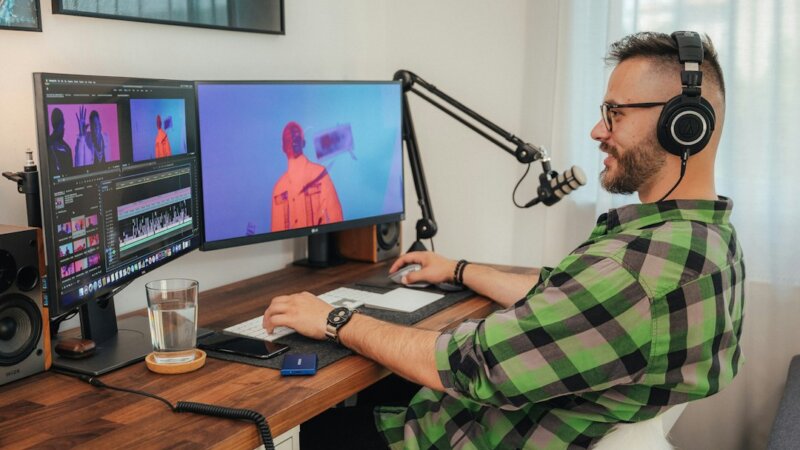
Editing is the entry point for many podcast professionals, and it’s one of the most viable work-from-home careers in the audio industry. The demand is real, the work is tangible, and the skill set is learnable.
### Core Technical Skills
A working knowledge of at least one professional-grade audio editing application is the baseline expectation. Beyond the software, editors are expected to understand noise reduction, EQ, compression, levelling to loudness standards, and basic sound design.
Editors who can also handle music licensing, intro and outro production, and chapter markers are more competitive in the marketplace.
### Soft Skills That Editors Underestimate
Speed matters. Clients with weekly publishing schedules need reliable turnaround times, and consistently meeting deadlines is often what distinguishes a good editor from a great one in the eyes of a client.
An ear for pacing — knowing where to cut not just for technical cleanliness but for narrative flow — is a higher-level skill that separates editors who can work on complex, storytelling-driven shows from those limited to straightforward interview formats.
### Rates and Career Progression
Freelance podcast editor rates vary widely based on experience, show complexity, and episode length. Beginners typically start at lower rates to build portfolio credits and raise them as demand and reputation grow. Editors who develop production and strategy skills often transition into producer roles over time, which typically command higher and more stable income.
—
## Professional Development and Industry Events to Know
Staying connected to the podcast industry community is part of building a sustainable career. Industry events, awards, and professional organisations provide networking opportunities, skill development, and visibility.
### Podcast Movement NYC
According to [Podwires](https://podwires.com), Podcast Movement ran 17–18 September at Terminal 5 in New York, with Libsyn serving as a stage sponsor. The conference featured sessions on video strategy, audience growth, and advertising measurement — core topics for anyone building a career in podcast production and strategy.
Attending or following coverage of events like Podcast Movement keeps professionals current on where the industry is heading, which directly informs what skills to develop.
### The Podcast Academy and the Ambies
The Podcast Academy has announced its September programming, including 2027 Ambies submissions, Podcast Movement NYC events, and networking opportunities for podcast professionals. The Ambies are the podcast industry’s peer-voted awards, and submission eligibility is a marker of professional standing. Keeping track of The Podcast Academy’s calendar is worthwhile for any serious podcast professional.
### The British Podcast Awards
For podcast professionals based in or connected to the UK market, the British Podcast Awards ceremony is scheduled for 1 October at The O2 in London — marking the awards’ tenth year. Comedian and podcaster Jake Bhardwaj has been named as host. Events like this draw producers, editors, and industry leaders together in ways that can open professional doors.
—
## Audience Quality and Ad Measurement: Why It Matters for Your Career
One area that podcast professionals increasingly need to understand is audience quality and advertising measurement. Oxford Road and Bumper have partnered to bring the Bumper Score into mainstream adoption, establishing a shared metric for validating real, verified podcast audiences.
For producers and editors, this might seem like an advertiser or sales concern — but it directly affects the health of the shows you work on. Shows with verified, quality audiences attract more advertisers, which means better-funded productions and more stable work for the professionals behind them.
Understanding how podcast advertising measurement works — even at a conceptual level — makes you a more informed and valuable contributor to any production team.
—
## Frequently Asked Questions
### What is a podcast jobs marketplace and how does it work?
A podcast jobs marketplace is a dedicated platform connecting podcast professionals — including producers, editors, and hosts — with employers and clients looking for podcast-specific talent. Unlike general job boards, a specialist marketplace like the one at [Podwires](https://podwires.com) focuses exclusively on the podcast industry, meaning listings are relevant and employers understand the medium. Job seekers create profiles or browse listings, while employers post roles ranging from full-time network positions to freelance per-episode editing contracts.
### Are there legitimate remote podcast production jobs available?
Yes, remote podcast production jobs are widely available and are among the most naturally remote-friendly roles in the media industry. Audio files are shared digitally, communication is largely asynchronous, and the entire production pipeline — from editing to distribution — can be managed without being physically co-located with a client or employer. Both freelance and full-time remote roles exist across editing, producing, show notes writing, and distribution strategy.
### How do I get freelance podcast jobs as a complete beginner?
The most effective starting point is building a portfolio of sample work, even if it means editing practice episodes from publicly available podcasts or producing a pilot of your own show concept. Beginners often start by working with smaller independent podcasters at competitive rates to build real credits and client relationships. A dedicated podcast industry job board, such as the marketplace at [Podwires](https://podwires.com), is a better place to look for beginner-friendly opportunities than general job sites.
### What skills do I need to get hired as a podcast producer?
To get hired as a podcast producer, you typically need demonstrated experience managing the full episode production pipeline — from recording logistics and guest coordination through to editing, mixing, and distribution. Increasingly, producers are also expected to understand audience analytics, video podcast workflows, and advertising measurement basics. Strong project management and communication skills are equally important, as producers coordinate across hosts, editors, and publishers.
### What are podcast editor jobs work from home like on a day-to-day basis?
Freelance podcast editors working from home typically manage a roster of clients with weekly publishing schedules, receiving raw audio files and returning polished, publish-ready episodes within an agreed turnaround time. Day-to-day work involves noise reduction, levelling, pacing edits, music integration, and sometimes chapter markers or transcript coordination. Reliable turnaround times and consistent audio quality are the key metrics clients use to evaluate and retain editors long-term.
—
## About Podwires
Podwires covers Podcast news and the Podwires podcast-professional marketplace — jobs, producers, editors, and hosts..
– **Website**: [podwires.com](https://podwires.com)
– **Coverage**: Podcast news and the Podwires podcast-professional marketplace — jobs, producers, editors, and hosts.
*This article was researched and written by the Podwires editorial team.*
{“@context”:”https://schema.org”,”@type”:”Article”,”headline”:”Podcast Jobs Marketplace: How to Find, Land, and Thrive in Podcast Industry Careers”,”description”:”Explore the podcast jobs marketplace — from remote podcast production roles to freelance editing gigs. Find out how to get hired through Podwires.”,”author”:{“@type”:”Organization”,”name”:”Podwires”,”url”:”https://podwires.com”},”publisher”:{“@type”:”Organization”,”name”:”Podwires”,”url”:”https://podwires.com”},”datePublished”:”2026-09-23T07:18:44.785Z”,”dateModified”:”2026-09-23T07:18:44.785Z”,”mainEntityOfPage”:{“@type”:”WebPage”,”@id”:”https://podwires.com/blog/podcast-jobs-marketplace-how-to-find-land-and-thrive-in-podcast-industry-careers”},”keywords”:”podcast jobs marketplace, podcast industry job board, remote podcast production jobs, freelance podcast jobs for beginners, how to get hired as a podcast producer, podcast editor jobs work from home”}
{“@context”:”https://schema.org”,”@type”:”FAQPage”,”mainEntity”:[{“@type”:”Question”,”name”:”What is a podcast jobs marketplace and how does it work?”,”acceptedAnswer”:{“@type”:”Answer”,”text”:”A podcast jobs marketplace is a dedicated platform connecting podcast professionals — including producers, editors, and hosts — with employers and clients looking for podcast-specific talent. Unlike general job boards, a specialist marketplace like the one at Podwires focuses exclusively on the podcast industry, meaning listings are relevant and employers understand the medium. Job seekers browse listings or create profiles while employers post roles ranging from full-time network positions to freelance per-episode contracts.”}},{“@type”:”Question”,”name”:”Are there legitimate remote podcast production jobs available?”,”acceptedAnswer”:{“@type”:”Answer”,”text”:”Yes, remote podcast production jobs are widely available and are among the most naturally remote-friendly roles in the media industry. Audio files are shared digitally, communication is largely asynchronous, and the entire production pipeline can be managed without being physically co-located with a client or employer. Both freelance and full-time remote roles exist across editing, producing, show notes writing, and distribution strategy.”}},{“@type”:”Question”,”name”:”How do I get freelance podcast jobs as a complete beginner?”,”acceptedAnswer”:{“@type”:”Answer”,”text”:”The most effective starting point is building a portfolio of sample work, even if it means editing practice episodes from publicly available podcasts or producing a pilot of your own show concept. Beginners often start by working with smaller independent podcasters at competitive rates to build real credits and client relationships. A dedicated podcast industry job board, such as the marketplace at Podwires, is a better place to find beginner-friendly opportunities than general job sites.”}},{“@type”:”Question”,”name”:”What skills do I need to get hired as a podcast producer?”,”acceptedAnswer”:{“@type”:”Answer”,”text”:”To get hired as a podcast producer, you typically need demonstrated experience managing the full episode production pipeline — from recording logistics and guest coordination through to editing, mixing, and distribution. Increasingly, producers are also expected to understand audience analytics, video podcast workflows, and advertising measurement basics. Strong project management and communication skills are equally important, as producers coordinate across hosts, editors, and publishers.”}},{“@type”:”Question”,”name”:”What are podcast editor jobs work from home like on a day-to-day basis?”,”acceptedAnswer”:{“@type”:”Answer”,”text”:”Freelance podcast editors working from home typically manage a roster of clients with weekly publishing schedules, receiving raw audio files and returning polished, publish-ready episodes within an agreed turnaround time. Day-to-day work involves noise reduction, levelling, pacing edits, music integration, and sometimes chapter markers or transcript coordination. Reliable turnaround times and consistent audio quality are the key metrics clients use to evaluate and retain editors long-term.”}}]}