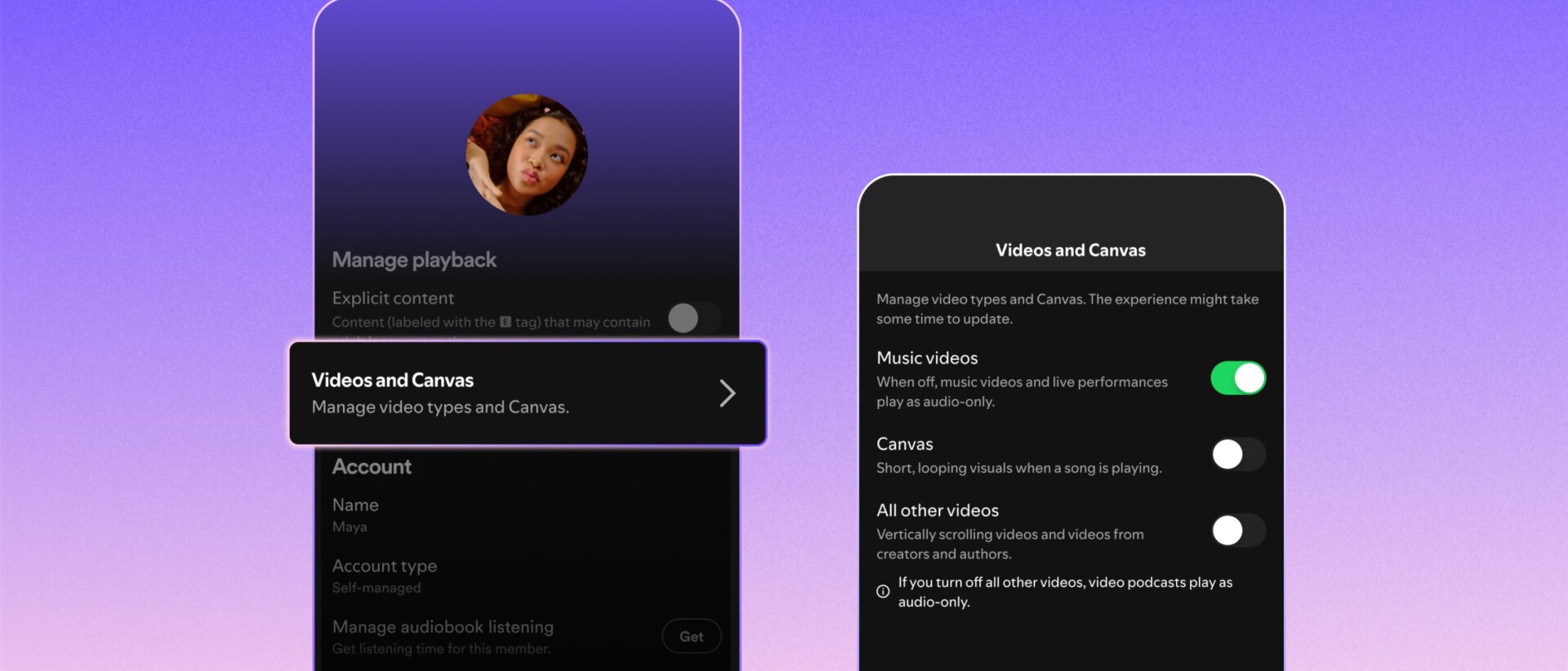
Spotify is introducing new video control settings that allow listeners to choose whether video content appears in their app, with the feature rolling out globally starting April 9, 2026.
The streaming platform said Family Plan managers can now switch video content on or off for any plan member through subscription settings, expanding controls previously available only for managed accounts of users under 13. All Premium and Basic subscribers on Individual, Duo, Family, and Student plans, as well as free-tier users, will gain access to video toggle settings beginning this month. Users can access the controls by navigating to Settings, then Content and display, where they can switch Canvas looping visuals or videos for music and podcasts on or off. The preference settings apply across mobile, desktop, web, TV, and all other platforms where users access Spotify.
The rollout reflects Spotify’s broader strategy of giving listeners greater control over their listening experience. The company has expanded managed accounts, introduced Smart Filters, and developed Taste Profile and Prompted Playlist features in recent months. A Burson survey of 8,400 respondents across 19 markets conducted from August 27 to October 3, 2025, found that 93 percent of Spotify users were excited about features providing more control, and 92 percent said Spotify brings them closer to content they love. Edison Research data showed that 86 percent of Generation Z listeners use music or podcasts to boost their mood.
Spotify did not provide direct quotes from executives in its announcement but emphasized the philosophy behind the update. The company stated that “time on Spotify should be intentional, personal, and rewarding,” and that the new video controls allow users to “shape an experience that feels right for them.” Co-CEO Gustav Söderström discussed the company’s intentional building approach in a separate message accompanying the announcement, though specific remarks were not detailed in the press materials.
For podcast and audio creators, the video control update carries implications for how visual content is consumed alongside audio programming. Podcasters who produce video versions of their shows or have hosted video content on Spotify will now operate in an environment where listeners can completely disable video display. This could affect audience metrics for video-based analytics and engagement rates, though listeners will still see video advertisements and Canvas-like visuals on select audio ads. Producers may need to adjust strategies around dual-format content, considering that some listeners will intentionally choose audio-only experiences.
The move positions Spotify within the broader streaming industry conversation about user agency and content control. Competitors including Apple Music and Amazon Music have offered varying levels of visual and audio content, but few platforms have granted listeners granular toggles for video display across all account tiers. The update also reflects growing listener preferences for intentional media consumption rather than passive browsing, a trend that gained prominence post-2024 as users increasingly sought to manage screen time and attention.
Spotify noted that video ads will continue to appear regardless of user video control settings, and Canvas-like visuals on certain audio advertisements will remain visible. The company has not disclosed specific metrics on how many listeners currently use video features or what percentage might disable them under the new settings. The rollout timeline spans the entire month of April 2026, suggesting a phased global deployment to ensure technical stability across regions and device types.
The video control feature represents another step in Spotify’s evolution from a music-centric platform toward a multiformat audio and visual entertainment service. As podcasting continues to mature and audiobook consumption grows on the platform, giving users control over presentation formats aligns with broader listener expectations for customization. The ability to tailor one’s experience across devices ensures that podcast listeners, music fans, and audiobook enthusiasts can shape how they interact with Spotify’s expanding content library, potentially improving long-term user retention and satisfaction in a competitive streaming landscape.
Source: Spotify Newsroom — Read the original article →