Zencastr, a podcast production platform, unveiled a major redesign Wednesday aimed at helping creators distribute content across video and social platforms as the industry shifts from audio-only formats to multiplatform distribution.
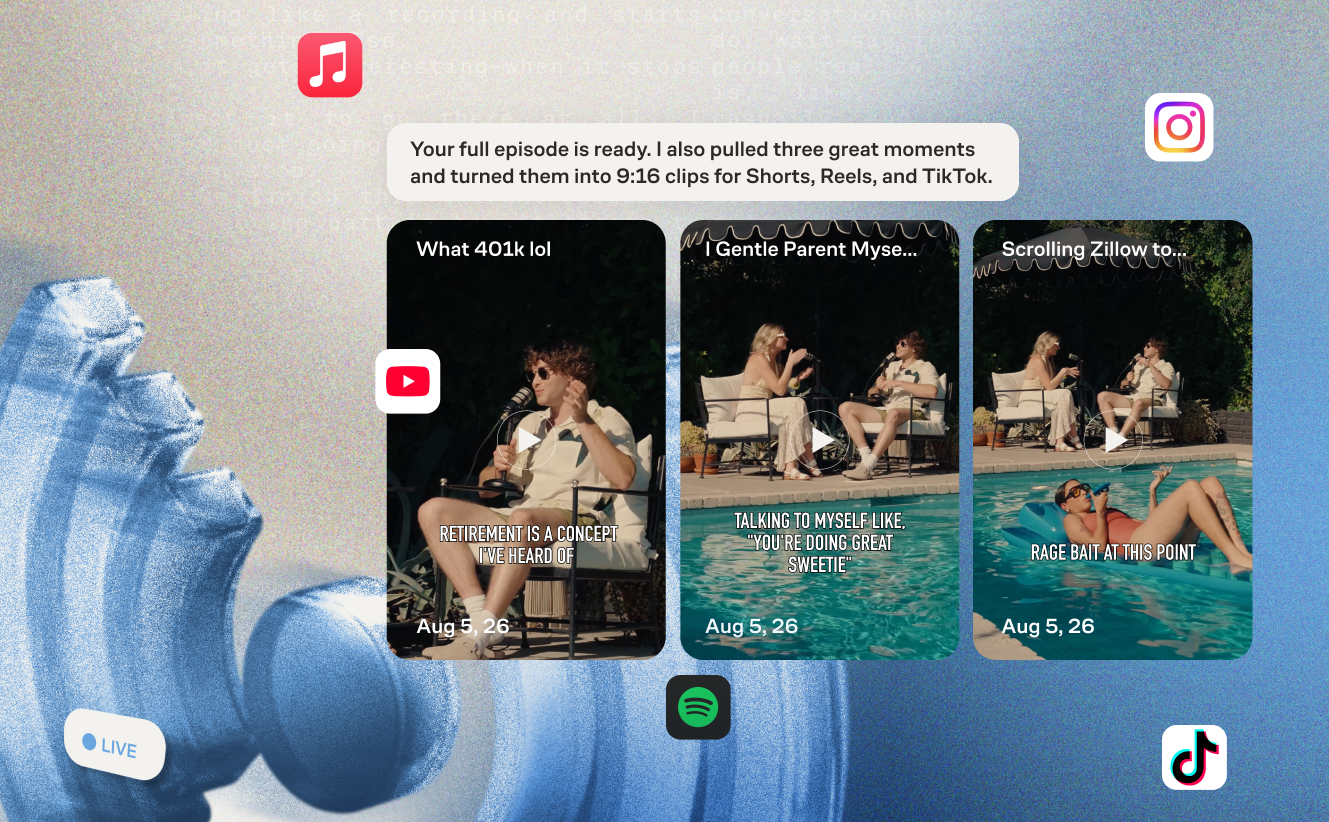
The San Francisco-based company expanded its free tier—renamed Vibecastr—to include 4K video recording, unlimited hosting and transcription, advanced analytics, and direct publishing to YouTube, Instagram, TikTok, X, LinkedIn, and Facebook. The update reflects a fundamental change in how listeners discover and consume podcasts. Zencastr CEO Adrian noted that YouTube has become the most popular destination for podcast consumption, surpassing Spotify and Apple Podcasts, while short-form clips on social media platforms now drive discovery for full-length episodes.
The global podcast market has grown to an estimated $50 billion with roughly 584 million monthly listeners, according to the company. However, Zencastr leadership emphasized that the shift extends beyond audience size. The platform’s redesign addresses what the company describes as a fundamental change in podcast consumption patterns, where video content and short-form clips have become central to audience engagement and discovery strategies.
Adrian, co-founder and CEO, said the platform was rebuilt around a core principle: “Your job is to make a great show, not to become a full-time video editor, social media manager, and distribution strategist on top of it.” He added that creators can now “record once, and show up everywhere your audience (and your future audience) already is.” The company committed to never using AI to clone voices or generate artificial podcasts, stating that “AI should help humans make podcasts and not the other way around.”
Industry observers say the update addresses persistent pain points for podcast producers navigating an increasingly fragmented media landscape. Creators have long faced pressure to repurpose content across multiple platforms, a time-intensive process that often requires specialized technical skills and third-party tools. Zencastr‘s integrated approach—combining recording, clipping, live streaming, and cross-platform publishing in a single interface—could reduce production friction for independent and small-team operations.
The redesign arrives as major podcast platforms grapple with changing listener behavior. Apple Podcasts, Spotify, and other dedicated podcast apps face increasing competition from YouTube and short-form social platforms, particularly among younger audiences. Industry data shows a growing percentage of podcast discovery occurs through social media clips rather than through traditional podcast directories, signaling a strategic necessity for creators to embrace video and social distribution.
New features include HD live streaming directly to Twitch and YouTube Live with automatic conversion to full episodes and clips, a chat-based AI assistant for editing and clipping, visual templates for audio-only shows, and what Zencastr describes as a personalized Producer that learns from user corrections and transcription edits. For a limited time, the platform offers unlimited production credits to free-tier users. The company also introduced a monetization model decoupled from audience size, paying creators for data they contribute to improve the platform’s AI tools—a feature designed to support shows with smaller but highly engaged audiences.
Zencastr raised capital in 2022 from its creator community with an explicit mandate to develop new monetization avenues beyond traditional download-based advertising. The company invested three years in research and development exploring sustainable revenue options for creators at all audience levels. The new monetization feature allows podcasters to earn from day one by contributing expertise and corrections that enhance the platform’s AI capabilities, regardless of listener count.
The platform update signals a broader industry recognition that podcast production and distribution have fundamentally transformed from a single-format, single-platform medium into a multimodal ecosystem. As creators increasingly leverage video, social platforms, and short-form content to reach audiences, production tools that streamline workflow across these channels may become competitive necessities for platforms serving the independent creator market.
Source: Zencastr — Read the original article →