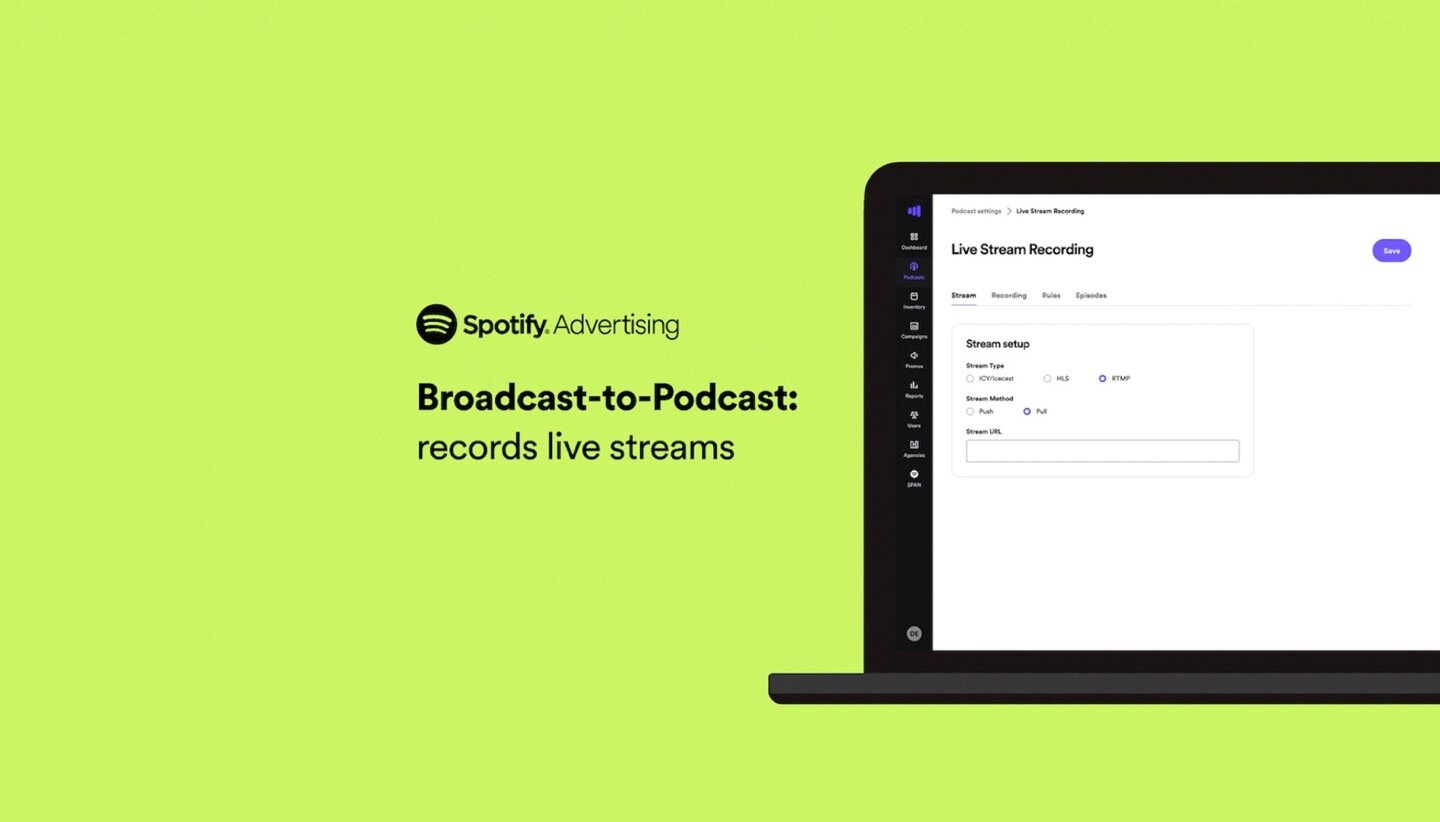
Spotify has made its broadcast-to-podcast technology available to all publishers using its Megaphone enterprise podcasting platform, automating the conversion of radio content into on-demand podcast episodes. The feature, built on technology acquired from Australian platform Whooshkaa in 2021, eliminates manual labor and opens new audience and revenue streams for broadcast publishers.
The broadcast-to-podcast tool, referred to as B2P, automatically converts previously aired radio content into podcast episodes after a one-time setup in Megaphone, eliminating a process that typically requires 30 to 60 minutes of manual work per episode. The automation handles downloading episodes from radio platforms, removing ad spots, placing ad markers, and uploading to podcast distribution, removing friction that becomes untenable when converting hundreds of episodes daily across networks. FOX News Audio is already using the tool to extend its audience reach and create additional revenue streams.
“After a simple, one-time setup process in Megaphone, broadcast-to-podcast will automatically create new podcast episodes from previously broadcasted content, making it easier than ever for broadcast publishers to reach new audiences with their content,” said Emma Vaughn, Global Head of Advertising Business Development and Partnerships at Spotify. Vaughn noted that radio listening has shifted gradually from over-the-air to streaming, with online broadcast radio listening in the U.S. growing 50 percent from 2019 to 2022. “Busy consumers want to listen to their favorite audio content on their own schedule,” she said, citing demand that has fueled podcast industry growth.
For podcast creators and audio professionals, the B2P tool represents a straightforward method to repurpose existing broadcast inventory without requiring technical expertise. The automation reduces production bottlenecks and allows publishers to focus creative resources elsewhere while still expanding their content libraries. Radio broadcasters entering the podcast space can now compete more effectively with native podcast creators by leveraging years of archived content, democratizing access to podcasting for legacy media organizations that previously lacked the technical infrastructure or staffing to make such conversions viable.
The announcement reflects broader industry trends in audio consumption. Spotify reaches more than 50 percent of Gen Z and millennials in the U.S., a demographic that increasingly prefers digital channels like podcasts for news and entertainment, according to Pew Research. The platform serves more than 500 million users globally across 180 markets, positioning broadcast publishers to access younger, digitally native audiences that traditional radio no longer reaches effectively. The shift underscores how legacy media organizations must adapt distribution strategies to remain competitive.
Podcast advertising spending is projected to reach nearly $2.2 billion in 2023, creating significant monetization opportunities for publishers embracing distribution platforms. The B2P tool automatically identifies existing ad marker locations in converted episodes, allowing publishers to replace or remove ads dynamically and reinsert new advertisements for additional revenue. Publishers can also access Spotify‘s Audience Network to monetize unsold inventory, creating multiple pathways for revenue generation from repurposed content. This flexibility transforms legacy radio ad spots into new monetization opportunities.
The B2P launch within Megaphone expands Spotify‘s enterprise podcasting offerings at a time when media companies face pressure to adapt legacy business models to digital platforms. By automating the technical and labor-intensive conversion process, Spotify removes a significant barrier to podcast adoption among broadcast publishers. The tool’s global availability to all Megaphone partners positions the platform as an essential infrastructure provider for legacy media companies seeking to extend their reach and revenue potential beyond terrestrial radio into the growing on-demand audio space.
Source: Google — Read the original article →