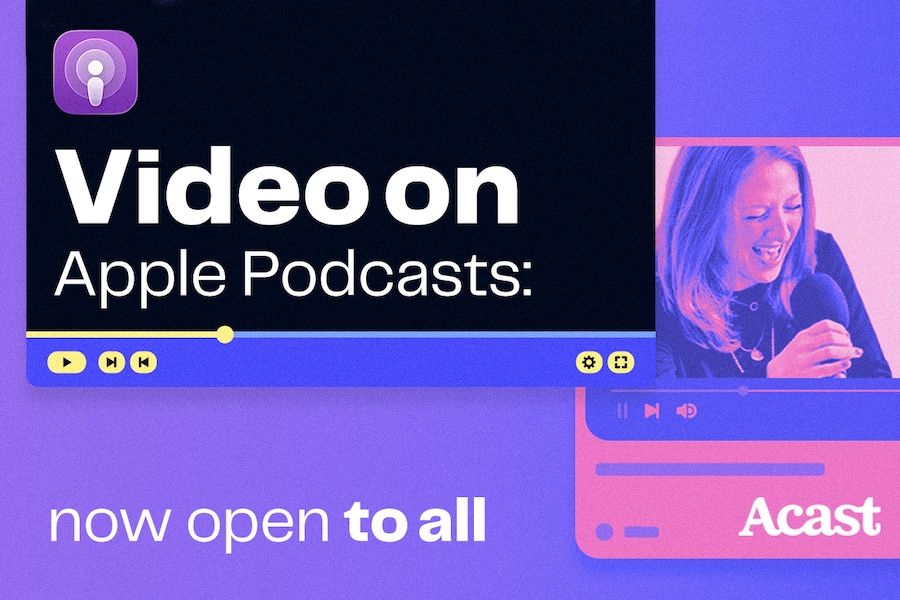
Acast is opening video publishing on Apple Podcasts to all creators on its platform, effective August 5, 2026, allowing podcasters to monetize video content through the audio hosting company’s advertising marketplace without invitation or waitlist.
The rollout represents a significant expansion of a feature previously available only to select shows in beta testing. Creators in Acast’s network can enable video publishing through their partner managers, while all other creators on the platform can access the capability through a new Video subscription plan that includes video upload, distribution to Apple Podcasts, automatic audio extraction, and performance analytics. The Video plan also allows creators meeting required audience thresholds to make video inventory available to advertisers through Acast’s marketplace.
The expansion comes after several months of testing with a limited group of shows. According to Acast, podcasts that added video during the beta period saw an estimated 25 percent increase in weekly sessions on Apple Podcasts over four months, measured in combined listens and views. The company said it used the testing phase to identify creator workflow needs, analytics requirements, and back-catalog handling preferences, with those findings informing the final product design.
“Any creator on Acast can publish video to Apple Podcasts. Not a waitlist, not an invitation, not a select group,” said Valerie Reimer, senior vice president of business development and strategic partnerships at Acast. “What no one else can offer is the scale of the monetization engine behind our podcasts, the demand waiting on the other side.”
The move positions video as an optional tool rather than a mandatory shift for podcast creators. Acast emphasized that shows choosing not to publish video are making a legitimate editorial decision, not falling behind industry trends. Creators can opt into video publishing and discontinue it without penalty, with consumption reverting to standard audio distribution if desired and existing episodes remaining intact.
For the broader podcast industry, the development signals growing advertiser appetite for multimodal podcast content. Acast‘s 2025 Podcast Pulse research found that nearly four in five listeners consume podcasts in both audio and video formats, depending on context, with audio remaining the dominant channel. State Farm and T-Mobile ran the first integrated video campaigns on Apple Podcasts with Acast in May, treating audio and video as a single media buy rather than separate inventory.
Acast positions itself as infrastructure serving multiple platforms rather than a destination competing for listener attention. The company distributes creator content formatted, monetized, and measured across Apple Podcasts, Amazon, Spotify, YouTube, and other podcast-compatible platforms. The expansion to all creators on Apple Podcasts reflects this multi-platform philosophy and extends Acast’s role as an intermediary between creators and the advertising demand they generate.
Advertisers are treating video in podcasting as a standard line item rather than an experimental format, according to Acast. The company noted that podcast advertising’s fundamental appeal—premium, brand-safe content at scale with measurable host influence—remains unchanged whether consumed as audio or video. Brands purchasing podcast advertising are seeking outcomes including attention, recall, and audience action rather than specific formats, making additional distribution channels valuable without requiring separate creative or media planning.
The timing of the broader video expansion on Apple Podcasts comes as the podcast industry continues consolidating around multimodal consumption. Video had emerged as a differentiating feature for podcast apps and a growth lever for creators seeking to expand audience reach. By opening video publishing to its full creator base with integrated monetization, Acast is betting that creators will view video as a complement to rather than replacement for audio content, extending the lifespan and reach of existing shows without fundamentally changing how podcast advertising or creator economics function in the platform.
Source: Acast — Read the original article →