Podglomerate queried five major artificial intelligence tools in June 2026 and found that two podcasts—City of Lights and Money Trauma—emerged consistently across all platforms as the year’s most notable new launches, highlighting how AI systems surface podcast content and the advantages certain shows gain through mainstream media backing.
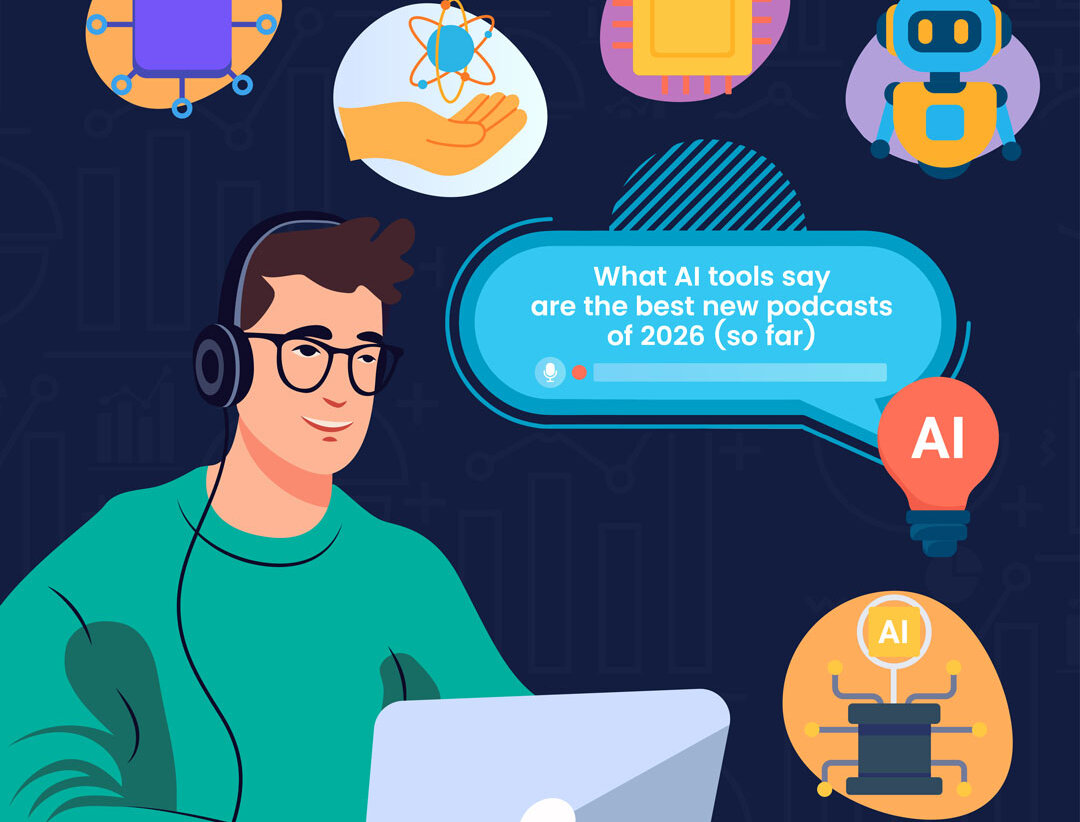
On June 2, 2026, researchers asked ChatGPT, Claude, Copilot, Gemini, and Perplexity to identify the best podcasts launched on or after January 1, 2026, that had received at least two press mentions. The exercise revealed that City of Lights and Money Trauma appeared in every single AI tool’s response, suggesting these shows have established online footprints that large language models recognize and prioritize. ChatGPT ranked Money Trauma, Big Bro With Kid Cudi, and City of Lights as its top three picks, noting that the first three had received the strongest combination of editorial attention and recommendation-list placement. Copilot listed Creation Myth, Money Trauma, City of Lights, and Love + Radio: Blood Memory as top new 2026 podcasts. Gemini identified City of Lights and Money Trauma as standout documentary selections. Perplexity included Money Trauma, City of Lights, and Pop Syllabus on its list of fully new launches. Claude highlighted City of Lights, Money Trauma, The Secret World of Roald Dahl, and Pop Syllabus as completely new podcasts worth noting.
The Podglomerate exercise builds on similar research conducted in February 2026, but with updated methodology reflecting how rapidly AI language models change. Since February, the underlying models powering these tools—GPT-5.5, Sonnet 4.6 Low, Smart, Gemini 3.5 Flash, and Sonar 2—have been updated or replaced, meaning they now draw from broader and more current training data. The researchers also refined their approach after the earlier exercise showed that even minor prompt variations can meaningfully shape AI responses. Excluding specific podcast titles or examples proved crucial to obtaining more authentic recommendations rather than mirror-image responses. The decision to use only five AI tools instead of seven reflected that Duck.ai and Lumo had produced limited or uncertain results in the previous round.
ChatGPT noted that “we’re only halfway through 2026, so the pool of brand-new shows with multiple press mentions is still relatively small,” and “the first three have received the strongest combination of editorial attention and recommendation-list placement, which tends to be the best early indicator that a new show is breaking through beyond its built-in audience.” Claude offered that it had conducted a “carefully researched breakdown, with the primary focus on completely new podcasts and one clearly labeled new season.” Gemini stated that “the narrative landscape in audio has seen some incredibly focused, independent documentary drops this year.” Perplexity explained that all included shows “have at least two press mentions in the sources I found.”
For podcast creators and industry professionals, the results underscore how AI tool visibility depends heavily on press coverage strategy and mainstream media partnerships. Podcasts with backing from established production companies, major outlets, or network affiliations consistently surfaced more reliably in AI responses across all five tools. Podcast-specific trade publications, particularly Podcast Review and its “Best New Podcasts of 2026 So Far” article, appeared as citation sources in every AI tool’s response. This finding suggests that securing reviews from podcast-industry trade outlets should be a priority for creators seeking AI discoverability. Independent creators or those with limited public relations resources face a steeper climb toward visibility in AI results, even if their work is critically acclaimed, because AI training data weights earned media coverage—which tends to be generated more frequently and in more places by shows with institutional backing.
The landscape of podcast discovery has fundamentally shifted toward AI-driven curation. When brand managers, journalists, and listeners seek recommendations, they increasingly start with AI tools rather than traditional search engines. Google has made “AI Mode” the default behavior for its flagship search feature, amplifying the importance of appearing in these conversational, authority-carrying results. Understanding which shows surface in AI recommendations serves as competitive research for podcasters developing their own discoverability strategies. The outlets and sources pulled into AI results should inform how creators structure earned coverage and media publicity efforts.
Despite differences in how individual AI tools frame their recommendations—ChatGPT and Copilot delivered more structured, neutral responses while Gemini took a more opinionated stance focused on documentary work—the consistency around City of Lights and Money Trauma signals that both shows have achieved significant online presence. However, demographic and genre gaps remain pronounced. Comedy, fiction, sports, religious programming, non-English-language podcasts, and shows created by and for underrepresented communities remain largely absent from AI tool responses. These absences represent opportunities for creators to differentiate and for AI developers to address biases in their training data and recommendation algorithms.
As the podcast industry continues to evolve alongside AI capabilities, the Podglomerate research demonstrates that AI visibility functions as a measurable marker of a show’s broader cultural resonance and media footprint. For podcasters, the takeaway is clear: building robust online presence through strategic press placement in trade outlets, securing mainstream media partnerships where possible, and understanding how different AI platforms weight and surface content will increasingly determine which shows break through in an increasingly crowded marketplace.
Source: Podglomerate — Read the original article →