SAG-AFTRA is moving to extend its coverage to podcast productions, a development that could reshape hiring practices, budget structures, and contractual obligations across the independent and network podcast sector alike. The Hollywood Reporter confirmed the union’s expanded interest, which arrives at a moment when podcasting’s production values — and its workforce — increasingly resemble the television and film industries the guild has long represented. For show operators running lean teams without traditional HR infrastructure, the shift raises immediate questions about compliance, talent costs, and what union coverage means for shows that have historically operated outside the guild system.
The labor development lands alongside a substantive new analysis from the Reuters Institute for the Study of Journalism that reframes how news organizations should think about podcasting as a business. The report documents a structural shift in news podcasting economics — one driven less by advertising CPMs and more by audience conversion, subscriber retention, and the growing premium placed on video-formatted shows. The Reuters Institute found that leading news podcasts are no longer being built primarily as audio products. They are being engineered as multiplatform content systems where the listening version is often a byproduct of a visual production, not the primary output.
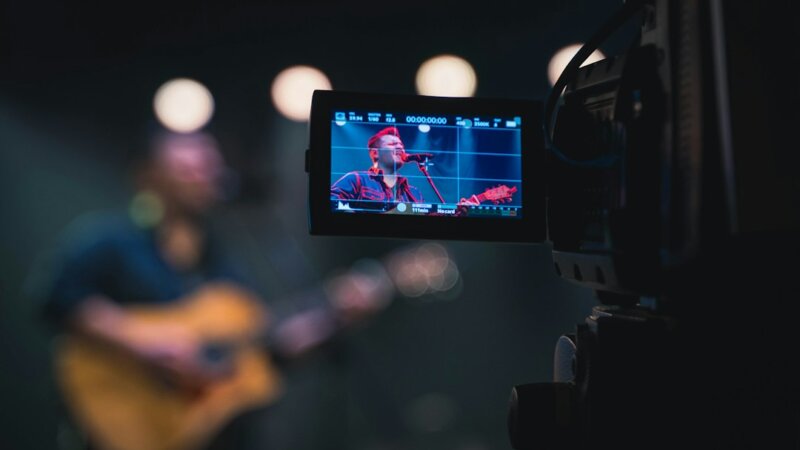
That distinction matters for producers and network executives making format decisions right now. The economics Reuters outlines suggest that the costs of video production are increasingly justified not by video ad revenue alone but by the downstream value of watch time, platform discoverability on YouTube, and audience segments who arrive through video and convert to paying subscribers or loyal listeners. Shows that treat video as a secondary export from an audio-first workflow may be leaving significant platform leverage on the table.
PBS News made that calculation explicit this week with the launch of “Settle In with PBS News,” a weekly video podcast that the public broadcaster is positioning as a distinct product, not a repackaged broadcast segment. The show represents PBS News’s clearest move yet into the structured video podcast format — a signal that public media institutions, often slower to adopt format shifts, now view the video podcast as a primary distribution vehicle rather than an experiment. For producers watching institutional media, the PBS entry confirms that video podcasting has cleared the threshold from trend to standard practice.
The New Yorker’s examination of what it calls CNN’s “podcast look” adds cultural context to the structural shift. The piece argues that cable news networks are essentially reverse-engineering the podcast aesthetic — stripped-down sets, direct-to-camera formats, conversational pacing — as a survival strategy against declining linear viewership. The analysis positions the podcast visual grammar not as a production shortcut but as a credibility signal for younger audiences who associate the format with authenticity and access. For podcast professionals, the irony is pointed: an industry that spent years borrowing legitimacy from television is now watching television borrow its visual language back.
Pew Research Center’s latest State of the News Media data on audio and podcasts provides the audience context that sits beneath all of these format and labor decisions. Pew’s figures show podcast listenership continuing to grow among adults under 50, with weekly podcast consumption now a normalized behavior across income and education brackets that advertisers have historically prioritized. The data also reflects a continuing fragmentation of where people encounter podcast content — not just dedicated apps, but YouTube, social video platforms, and smart speakers — which reinforces the multiplatform imperative that Reuters and PBS are responding to in their own ways.
Taken together, this week’s developments point toward a podcast industry undergoing a kind of institutional adolescence. The labor infrastructure is catching up to production scale. The economics of news audio are being formally studied and documented rather than improvised. Public broadcasters are treating the format with the same resource commitment they’d give a television product. And legacy television is cannibalizing the podcast aesthetic precisely because it has proven its audience appeal.
For show runners and network operators, the practical implications are compounding. Budgets that did not account for union jurisdiction may need revision. Format decisions made two years ago for audio-first workflows may need to be revisited against Reuters’ multiplatform economics. And the audience data from Pew suggests there is still significant room to grow — provided the industry builds for how people are actually consuming content, not how they were consuming it when the format was still a novelty.