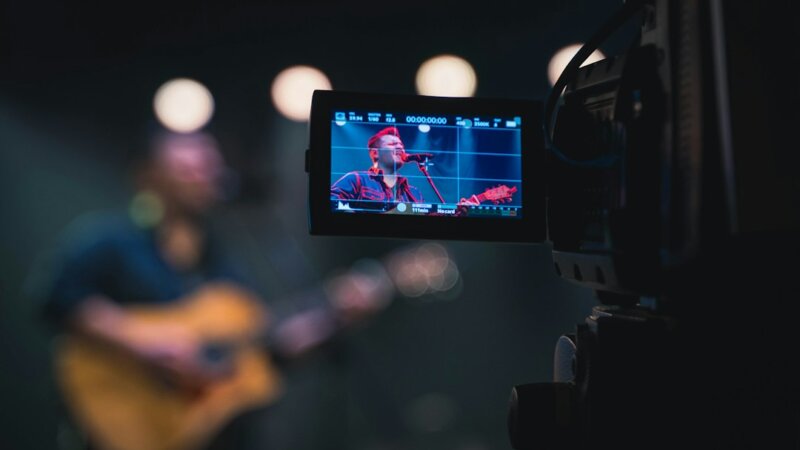
The economics of news podcasting are fracturing along predictable lines — and a sweeping new report from the Reuters Institute for the Study of Journalism at Oxford University makes clear that the organizations navigating the shift best are the ones treating podcasts less like audio products and more like multiplatform shows with diversified revenue logic. The report, which examined news audio operations across multiple markets, found that the dominant model is migrating away from pure listening toward video-accompanied formats, with publishers increasingly monetizing attention on YouTube and other visual platforms rather than relying on traditional host-read advertising or premium subscriptions alone. The findings arrive at a moment when the structural question of what exactly a podcast is remains, formally, unresolved.
Hollywood Reporter confirmed this week that a formal Podcast Industry Taskforce has been organized specifically to answer that question. The group, drawing stakeholders from production, distribution, and advertising, is attempting to establish a working definition of the medium — a task that sounds administrative but carries real commercial weight. Without a shared definition, measurement standards diverge, ad buying becomes inconsistent, and the audience data that underpins every monetization conversation loses comparability across platforms. The taskforce’s formation signals that the industry has finally acknowledged that years of definitional drift have created structural inefficiencies that cannot be papered over by growth numbers alone.
The Reuters Institute report adds analytical texture to what that drift has cost. According to the study, news podcasts that have achieved sustainable economics tend to combine a core audio product with video distribution, live events, and direct reader or listener revenue — essentially treating the podcast as one node in a broader content and community strategy rather than a standalone business. Pure-play audio news operations, by contrast, face mounting pressure as advertising rates remain volatile and platform algorithms increasingly favor video inventory. The report stops short of declaring audio-first news podcasting unviable, but its data portrait is not encouraging for operations that have not yet diversified.
PBS News is making exactly the kind of institutional bet the Reuters data would seem to support. The public broadcaster launched a weekly video podcast called “Settle In with PBS News” this week, extending its journalism into a conversational, visually driven format aimed at audiences who want news context rather than breaking updates. The move follows a broader pattern among legacy public media organizations using podcasting — particularly video podcasting — to reach younger demographics that have largely abandoned linear television news. For PBS, the format also aligns with YouTube’s growing dominance as a podcast discovery and consumption platform, a dynamic the Reuters report specifically identifies as a structural force reshaping where news audio investment flows.
Meanwhile, Pew Research Center’s latest State of the News Media data on audio and podcasts provides the audience-side numbers that contextualize these strategic decisions. Pew’s figures show that podcast listenership has continued to grow among adults under 50, with news and current affairs remaining among the top genre categories by time spent — even as overall digital news consumption patterns fragment. The data reinforces what producers and network executives have observed anecdotally: audiences for news audio exist and are engaged, but converting that engagement into predictable revenue remains the central operational challenge. Pew’s research also highlights that a significant share of podcast news consumers are not regular consumers of other news formats, which gives news audio a genuine audience acquisition argument that is separate from the platform migration story.
Compounding all of it, Podcast Review’s annual ranking of the best daily news podcasts for 2026 reflects how competitive the field has become. The list includes expected institutional names alongside newer entrants, underscoring that daily news audio — once a format with a handful of serious players — has become genuinely crowded. For producers and show managers operating in that space, differentiation increasingly depends on host voice, production quality, and the kind of format clarity that the industry taskforce is now, belatedly, trying to enforce from the definitional level up.
Taken together, this week’s developments suggest an industry at an inflection point that is structural rather than cyclical. The Reuters Institute’s economics analysis, Pew’s audience data, the taskforce’s definitional work, PBS’s format investment, and the competitive daily news field all point toward the same conclusion: the podcast industry’s next phase will be defined less by growth in raw numbers and more by the organizations disciplined enough to build durable business models around an audience that is watching as often as it is listening.